Protecting Texas Landowners When the Government or a Utility Wants Your Land
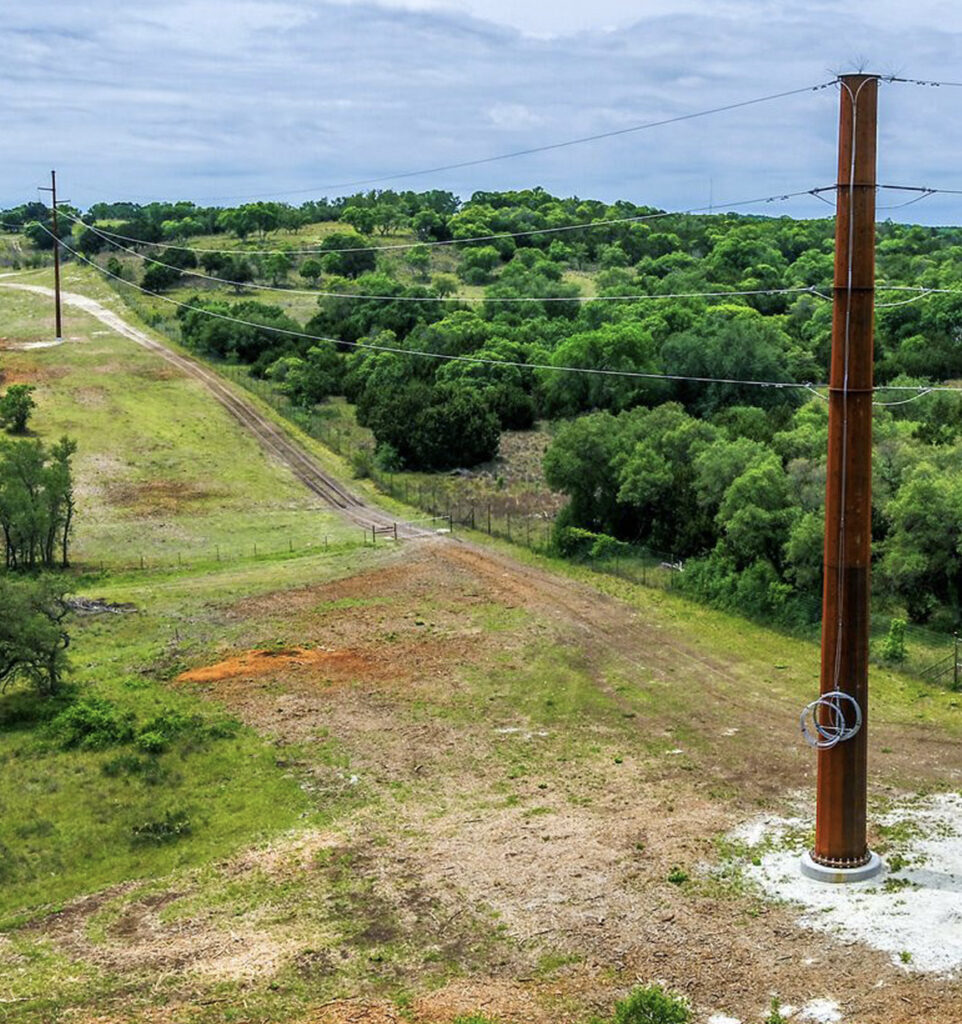
If you own property in Texas, a certified letter from a government agency or a utility company can change your plans overnight. Across the state, road expansions, pipelines, water lines, and high-voltage transmission projects are moving forward, and many of them cross private land. Eminent domain and condemnation are the legal tools that make those takings possible. Understanding how the process works in Texas is the first step toward protecting your land and the compensation you are owed.
At Braun & Gresham, we represent Texas landowners only. We do not work for utilities, pipeline companies, or condemning authorities. That focus shapes how we approach every case.
People often use “eminent domain” and “condemnation” as if they mean the same thing. They are related, but they are not identical.
Eminent domain is the legal power to take private property for public use. Condemnation is the legal process a condemning entity uses to exercise that power. In other words, eminent domain is the authority, and condemnation is the procedure.
This power is not unlimited. Both the Texas Constitution (Article I, Section 17) and the Fifth Amendment to the U.S. Constitution allow property to be taken for public use only when the owner receives adequate compensation. Texas law goes a step further and prohibits taking property purely for tax revenue or private economic development.
However, eminent domain authority in Texas belongs to more than just the government. The Legislature has extended it to certain private entities, including electric utilities, pipeline operators, and other infrastructure companies, when their projects serve a recognized public use. That is why a private utility building a transmission line can pursue land the same way a state agency building a highway can.
Condemnation vs. Easement: What Is Actually Being Taken?
In many infrastructure cases, the condemning entity is not buying your land outright. It is acquiring an easement, which is a legal right to use a defined strip of your property for a specific purpose, such as building and maintaining a power line or pipeline. You keep title to the land, but the easement limits what you can do with that strip and gives the company long-term access.
Because most transmission and pipeline takings involve permanent easements, the specific easement language matters as much as the dollar amount. It defines what the company can and cannot do on your property for decades.
What to Do After Receiving a Condemnation Notice
The period right after you receive a notice or an offer letter is when landowners have the most room to protect their position, and it is also when costly mistakes happen. A few practical steps can make a meaningful difference.
Do not ignore it, and do not sign right away. An offer letter is the beginning of a negotiation, not a final demand. Signing quickly can lock in both a compensation figure and easement terms that cannot be changed later.
Read what the offer actually covers. Early offers are frequently based on limited analysis and may reflect only the strip being taken, not the impact on the rest of your property. Understanding what is and is not included is essential before you respond.
Note every deadline. Condemnation and its related processes move on fixed timelines. Some steps carry firm deadlines, and missing one can permanently limit your options, so track dates carefully from the moment you are contacted.
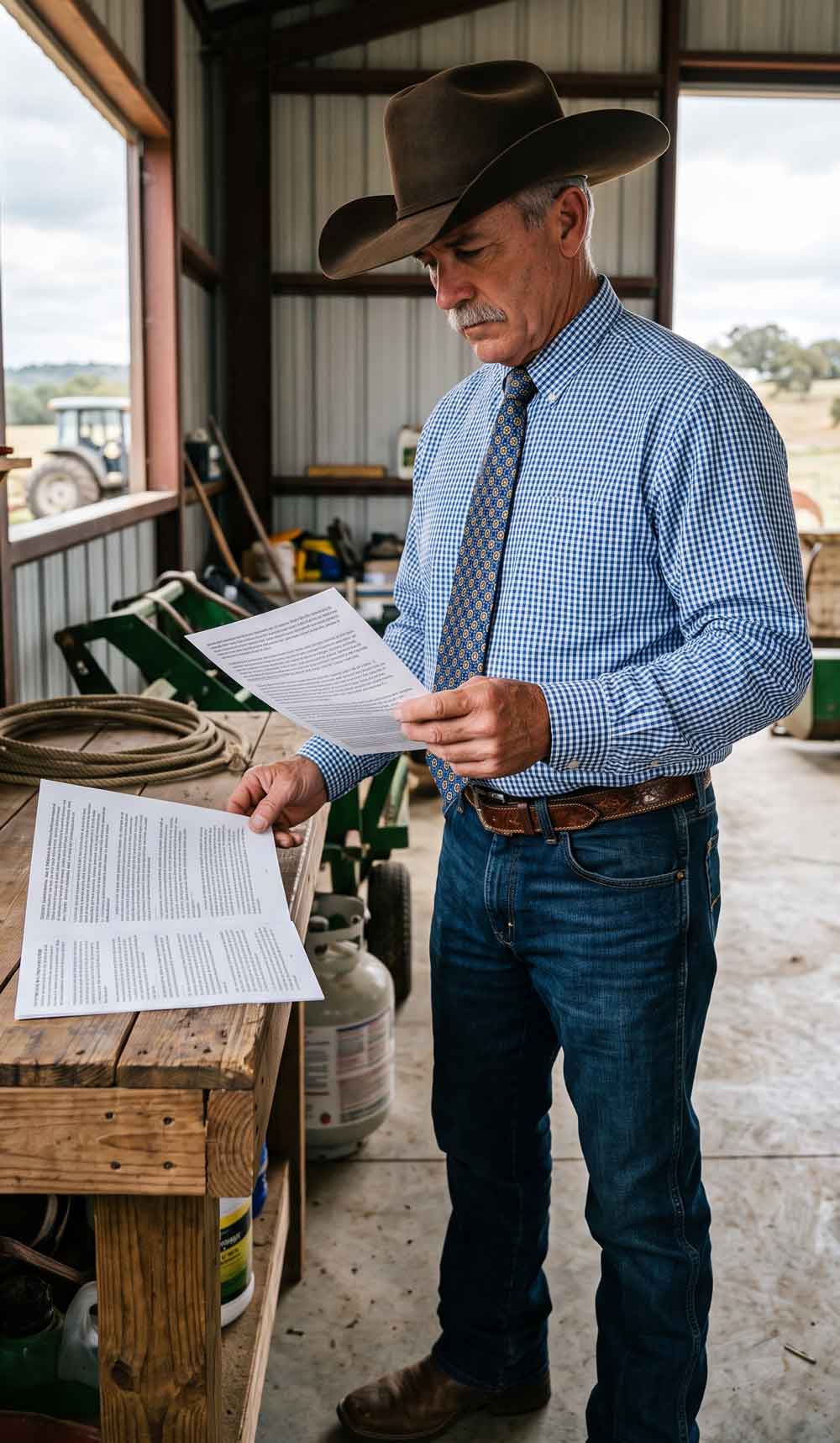
Ask for the Landowner’s Bill of Rights. Any entity exercising eminent domain in Texas is required to provide this document. It summarizes your rights and confirms that the process must follow specific rules.
Talk to a landowner attorney and an appraiser early. Utilities and agencies handle these cases every day, often with teams of right-of-way agents, lawyers, and appraisers. Most landowners face this only once. Getting your own advisors involved early helps level that imbalance.
The Texas eminent domain condemnation process is governed by Chapter 21 of the Texas Property Code. While every case is different, they follow a similar sequence.
01
Bona fide offer and negotiation.
Before filing suit, the condemning entity must make what Texas law calls a bona fide offer. That generally means an initial written offer, an appraisal from a certified appraiser, and a final written offer for at least the appraised amount. The law typically requires at least 30 days between the initial and final offers and gives you at least 14 days to respond to the final offer.
02
Condemnation petition filed.
If you and the entity cannot agree, it may lead to the condemning entity to file a petition (or lawsuit) in the appropriate court. The petition must state the public use, identify you as the owner, confirm that the parties could not agree, and confirm that the entity provided the Landowner’s Bill of Rights and made a bona fide offer.
03
Special commissioners appointed.
Generally within 30 days of the filing, the judge appoints three local landowners as special commissioners, along with two alternates. These commissioners must live in the county where the case is filed. Their job is narrow: they decide how much compensation you are owed, not whether the taking itself is allowed.
04
The special commissioners’ hearing.
This hearing works like a very informal trial. Both sides present evidence about the property’s value and any damages, often through appraisers. The commissioners then issue a written award setting the compensation amount.
05
Award, objection, and trial.
If either side disagrees with the award, it can object by filing a written statement with the court. Under Texas law, that objection is due on or before the first Monday after the 20th day following the date the commissioners file their findings with the court. A timely objection moves the case to litigation, where a judge or jury can ultimately determine compensation and, in some cases, right to take issues.
06
Judgment and possession.
If no one objects, the court adopts the commissioners’ award as its judgment. It is worth knowing that once the entity deposits the award amount into the court’s registry, it can take possession of the property while any further litigation continues.
How Compensation Is Calculated
In Texas, compensation in a condemnation case is built around the fair market value of what is taken, measured at the time of the taking. Courts generally apply what is known as the before-and-after rule, comparing the value of your property before the taking to its value afterward.
How that plays out depends on how much is taken:
Whole taking. If the entire property is acquired, compensation is generally based on its fair market value.
Partial taking. If only a portion is taken, which is common with easements, compensation typically includes the value of the part taken plus any reduction in value to the land you keep. That second piece is often called remainder or severance damages.
Texas law also allows property to be valued at its highest and best use, not just its current use. Land being used for grazing today, for example, may be valued with its realistic development potential in mind.
Consider a simple illustration. Suppose a utility needs a 200-foot-wide easement across one corner of a working ranch. Compensation would typically address not only the value of the land inside that easement, but also the effect on the rest of the ranch, such as a divided pasture, lost road frontage, or interference with irrigation. This is why an initial offer focused only on the easement strip can fall well short of the full impact.
Because valuation involves appraisal methodologies and case-specific facts, two qualified appraisers can reach very different conclusions. You have the right to obtain your own appraisal rather than relying on the condemning entity’s number.
Can You Challenge or Negotiate?
Yes, though it helps to be realistic about what “challenge” means. When a project has legitimate public-use authority, stopping it entirely is uncommon. What landowners can often do is shape the outcome in three ways.
Challenge the authority or the public use. In some cases, a landowner can question whether the entity actually has the power to condemn the property, or whether the taking meets the public-use requirement. These arguments are typically raised through a motion in the court proceeding rather than before the special commissioners.
Negotiate the terms, not just the price. Easement documents often include language about access, future expansion, restoration, and permitted uses. Negotiating that language can be as valuable as negotiating the dollar figure, because those terms affect how you can use your land for years to come.
Object to the award and go to trial. If the special commissioners’ award does not reflect the true impact on your property, either side can object within the statutory deadline and have the compensation decided at trial. This is a routine, expected part of the process, not an act of hostility.
Texas gives property owners specific protections throughout the condemnation process. Many of them are collected in the State of Texas Landowner’s Bill of Rights, prepared by the Office of the Attorney General under Texas Government Code Section 402.031 and Chapter 21 of the Property Code. At a high level, those rights generally include:
The right to adequate compensation for the property taken, including damages to your remaining land where they apply.
The right to a bona fide offer and to receive the Landowner’s Bill of Rights before a lawsuit is filed.
The right to a hearing before the special commissioners, where you can present your own evidence and question the other side’s.
The right to your own appraiser and attorney rather than relying on the condemning entity’s experts.
The right to object and appeal, moving the compensation question to a trial when the award falls short.
These rights only help if they are exercised in time and used well. The rules are detailed, and the entity on the other side knows them thoroughly.
We focus our eminent domain and condemnation work on one side of the table: the landowner. Our attorneys work with landowners across Texas to review offers and easement language, coordinate independent appraisals, negotiate terms, and, when needed, take compensation disputes to a hearing or trial. Where neighbors face the same project, we can also coordinate groups of landowners to share costs and strengthen their position.
Our goal is not to delay a project without reason. It is to make sure that if your land is taken, you understand what is being requested and you are treated fairly.
Trustindex verifies that the original source of the review is Google.
A big thank you to Cory for her excellent and professional expertise with a real estate issue I had .she was very professional and very knowledgeable
I will undeniably refer everyone to this law firm!!!
Posted on Google
William Stefka
Trustindex verifies that the original source of the review is Google.
A friend said he had a good experience with them and I can see why. They have a simplified, yet comprehensive estate planning process focused on asset protection. Personable and professional.
Posted on Google
Orlando Garza
Trustindex verifies that the original source of the review is Google.
I have a small parcel of land (100 acres) Nathan Yates and his staff did a great job with the legal work for the wind lease. I felt like the attention to detail shown was the same I would have received if I would have had 5000 acres. Would recommend their services.
Posted on Google
Judy Marmolejo
Trustindex verifies that the original source of the review is Google.
Great experience working with B&G. Took care of my families needs in the ways needed.
Posted on Google
Sam Neylan
Trustindex verifies that the original source of the review is Google.
No one 'wants' to need legal representation. However, if you do need it for all land related issues, your future self will thank you for choosing Braun & Gresham. I've worked with many attorneys in the past & they all pale in comparison to Braun & Gresham. B/G were timely, clear communicators, asked good questions, were conscientious about getting to the point to help reduce MY billable hours, not augment theirs, and probably most importantly, they are experts at what they do and it shows.
I don't ever want to have to use them again but if something comes up in the future, I would ONLY use them. :)
Posted on Google
Jim Smyle
Trustindex verifies that the original source of the review is Google.
B&G was recommended to us by a trusted friend as a good law firm to represent us in setting up a conservation easement on our Hill Country land. Professionally, they were flawless and led us through the process in a very efficient manner. It was also a tremendous plus that everyone we interacted with there -- Corey was our main advisor -- were good people who we enjoyed working and interacting with. My wife and I both give full marks to Braun & Gresham and would recommend them to anyone with zero hesitation.
Posted on Google
gerry neal
Trustindex verifies that the original source of the review is Google.
The folks at Braun & Gresham are number one in my opinion. They have helped us for many years. You won't find a better group to lead you through the problems that come with land ownership.
Posted on Google
marvin morse
Trustindex verifies that the original source of the review is Google.
Cassie and Jenna were a total pleasure to work with. I really appreciate them!
Posted on Google
Betty Alex
Trustindex verifies that the original source of the review is Google.
Every single person I have spoken to during the several years we have been associated with Braun and Gresham has been highly knowledgeable and exceptionally helpful. It's like your lawyer is the family next door. I really appreciate their exceptional professionalism and kindness.
Posted on Google
Mike Speck
Trustindex verifies that the original source of the review is Google.
Braun & Gresham have been fantastic! They have been friendly and professional every step of the way. We are so fortunate to have them helping and representing us in such important matters.
Frequently Asked Questions
Yes, Impreza provides full RTL support out of the box, just change language at Settings > General, and needed styles will apply automatically.
Stopping a project with legitimate public-use authority entirely is uncommon. In some cases you can challenge whether the entity has the power to condemn or whether the taking qualifies as public use. More often, landowners focus on negotiating better easement terms and pursuing full compensation.
No. An initial offer is the start of a negotiation. Early offers often reflect only the portion being taken and may not account for the impact on the rest of your property, so it is generally worth having the offer reviewed before you respond.
Under Texas law, before filing a condemnation suit, the entity generally must make an initial written offer, obtain a certified appraisal, and make a final written offer of at least the appraised amount. Specific timing requirements also apply between the offers.
Compensation is generally based on the fair market value of the property taken, using a before-and-after comparison. If only part of your land is taken, compensation typically also includes damages to the value of the land you keep.
It varies widely depending on the property, the project, and whether the case goes to trial. Some matters resolve in a few months through negotiation, while contested cases can take considerably longer.
Yes. An objection is generally due on or before the first Monday after the 20th day following the date the commissioners file their findings with the court. Because deadlines like this are firm, it is important to act promptly.
You are not required to have one, but condemning entities are typically represented by experienced legal and appraisal teams. Having your own advisors helps you understand what is being requested and pursue compensation that reflects the full impact on your land.